
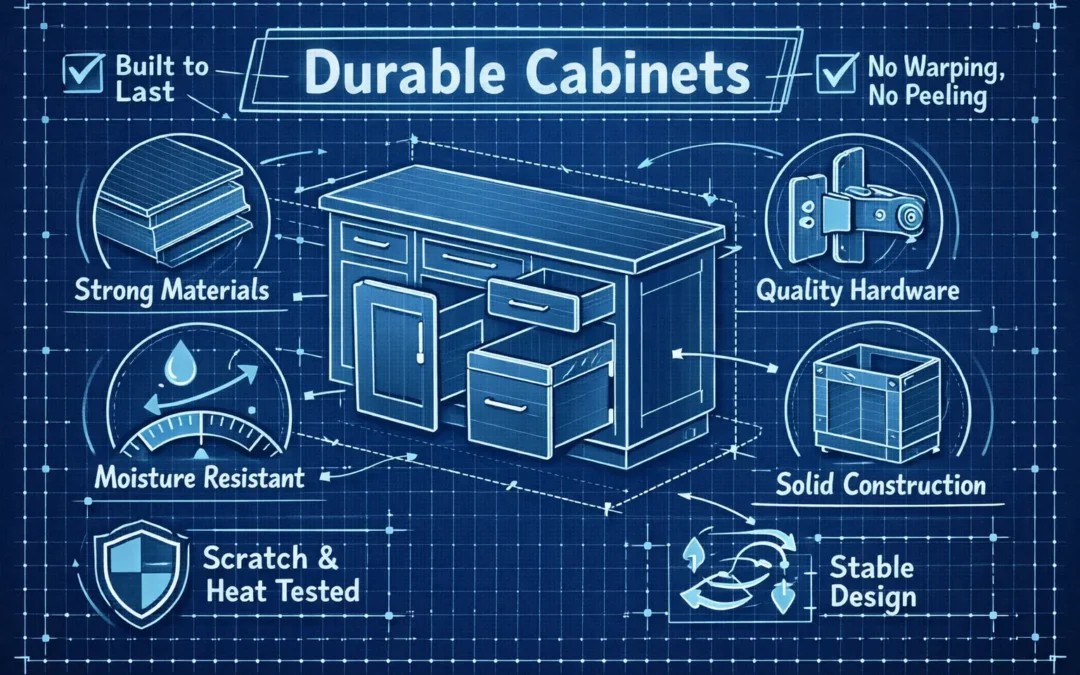
10 Signs of Durable Kitchen Cabinets That Avoid Warping or Peeling
Learning how to identify durable kitchen cabinets that avoid warping or peeling starts with spotting materials and construction that actually resist steam and spills. Focus on build details rather than marketing names when you compare options in showrooms or online.
This checklist lists ten practical signs to check quickly. For each sign you’ll get two fast visual or tactile checks and one direct question to ask the maker, so you can narrow choices in minutes. It covers cores, edge sealing, adhesives and finishes, and compares melamine, laminate, thermofoil, engineered wood and metal options so you end up with a reliable shortlist instead of another sheet of specs.
What you need to know
A few core facts will speed up every inspection. These basics help you read a spec sheet and recognize shortcuts on the showroom floor.
- Plywood core: Choose face-grade plywood for carcasses and doors in moisture-prone kitchens. Plywood resists warping better than untreated solid wood or plain particleboard, and it holds screws more securely. Ask to see a cross-section sample to confirm layered construction.
- Sealed edges: Fully sealed edge banding and waterproof adhesives keep water from wicking into the panel. Visible gaps, raw edges or uneven edge tape are red flags because they let moisture swell the core. Check ends and joints closely and insist on continuous sealing where panels meet sinks or hobs.
- Durable finishes: Factory-applied, multi-coat systems such as conversion varnish, UV-cured lacquer or high-solid polyurethane bond tightly to the substrate and resist chipping. Thin thermofoil or low-grade veneers are more likely to peel when exposed to heat and steam. Verify the finish method and coat count rather than relying on surface names alone.
- Quick tests: Run a basic steam exposure and a mild scrub on a sample to check finish adhesion and water resistance. A simple tape pull and a short warm-cloth test reveal most early failures.
Quick checklist: 10 signs to spot cabinets that won’t warp or peel
Use this checklist as a practical shorthand when you visit showrooms or interview suppliers. For each sign, run the two quick checks and ask the single question provided so you focus on construction and finish rather than headline claims.
1. Core material: Visual check for visible plywood layers or metal panels in carcasses and doors; tactile check by pressing the panel—if it flexes under moderate pressure it’s likely particleboard or low-grade MDF. Ask the supplier: “Is this BWP or phenolic-bonded plywood, or a metal core, and can I see a cross-section sample?”
2. Edge sealing and adhesives: Visual check for continuous edge-banding and sealed ends; tactile check by running your finger along joints and flipping a sample to inspect glue lines for gaps or uneven application. Ask: “Which adhesive do you use and is it phenolic or WBP rated for moisture exposure?”
3. Finish type and application: Visual check of the spec and product for factory-applied, multi-coat finishes (conversion varnish, UV-cured lacquer or high-solid polyurethane); visual check of door edges and hinge pockets for even coverage and absence of brush marks. Ask: “What finish method and how many coats are applied, and can you confirm the cure process?”
4. Finish adhesion and water resistance: Perform a tape pull on an inconspicuous edge (adhesion check) and hold a warm, damp cloth on an underside edge for several minutes (moisture check) to spot flakes, lifting or swelling. Ask: “Can I see adhesion and moisture-resistance test results or perform those tests on a supplied sample?”
5. Surface material and bond: Visual check for bubbling or seam issues on thermofoil near ovens or cooktops; tactile check at edges for early delamination or edge lift. Ask: “Is the laminate or thermofoil applied over plywood, and what heat-resistance or bonding specifications do you provide?”
6. Joinery and carcass construction: Open drawers to check for dovetail or screwed joints (joinery check) and inspect drawer boxes and panels to confirm plywood rather than stapled particleboard (panel material check). Ask: “What joinery methods and panel thicknesses are standard for your carcasses and drawers?”
7. Hardware and fittings: Test drawers for smooth full-extension movement and reliable soft-close action (operational check) and inspect hinges and mounting plates for metal plates screwed into solid panels (mounting check). Ask: “Which hardware brands and load ratings do you use, and are mounting plates screwed into solid panels?”
8. Installation and site protection: Verify that installers seal cabinet bottoms, backs and cut-outs around sinks and hobs (installation protection check) and confirm ventilation or clearance behind appliances to prevent trapped moisture (ventilation check). Ask: “What installation practices do you follow to protect cabinets from site moisture and heat exposure?”
9. Moisture ratings and certifications: Inspect labels and spec sheets for explicit designations such as BWP, BWR or marine grade (rating check) and confirm adhesive and substrate certifications or third-party test data (certification check). Ask: “Do you provide moisture ratings and third-party test data for the core and adhesive systems?” For guidance on handling wet environments and design options that resist humidity, review high-humidity cabinetry solutions.
10. Documentation and warranty: Require a written spec sheet that lists plywood grade, core construction, adhesive chemistry and finish method (documentation check) and review warranty terms for coverage of warping, delamination and finish failure including exclusions and response times (warranty check). Ask: “Can you supply a written specification and warranty that explicitly covers warping and delamination, and what are the on-site repair terms?”
Finish and surface tests: what lasts under steam and scrubbing
Factory-applied, multi-coat finishes that cure and bond chemically to the substrate resist chipping and lifting under steam and frequent cleaning. Conversion varnish, UV-cured lacquer and high-solid polyurethane typically hold up better than site-applied paint or thin foils. Ask the maker for the finish method and coat count before you commit.
Run three quick, safe tests on a supplied sample or an inconspicuous showroom panel. First, perform a tape pull test: press quality tape firmly to an edge and pull sharply at an angle, then look for flakes or lift. Second, hold a warm, damp cloth on an underside edge for five minutes, then inspect for swelling, discoloration or seam failure. Third, use a soft scouring pad and mild cleaner to check abrasion resistance and whether the finish dulls or scratches.
Know the trade-offs for thermofoil, melamine and laminate so you apply the tests appropriately. Thermofoil is easy to clean but can bubble near sustained heat, so verify edge bonding and heat resistance. For a broader comparison of common cabinet materials and their strengths, see a summary of the best materials for kitchen cabinets. High-pressure laminate and quality melamine resist moisture and scratching, especially when bonded to plywood rather than particleboard or plain MDF.
Hands-on tests you can do in store or at home
Keep a short, repeatable test routine you can run in a minute or two on supplied samples or the underside of doors. Always ask store staff before testing showroom pieces and choose a concealed area for any adhesion checks. A small set of tests gives a quick sense of likely failure points.
A quick water-drop test reveals absorbent cores: place a single drop on an underside spot and wipe it off after ten seconds; the surface should not darken. For a controlled steam check, hold a hot cloth or kettle steam a few inches from an edge for 15 to 20 seconds and watch for immediate swelling or lift. Use a fingernail or a coin with light pressure to test surface hardness—visible gouges from a fingernail indicate a soft finish.
Carry a small sample kit to compare options and document results: a spray bottle of water, a roll of quality tape, a coin or metal fingernail tool, and a phone camera to photograph test spots. Test two or three locations per door, note any darkening or lifting, and record observations so you can compare suppliers objectively. Use photos and notes when you follow up with manufacturers so claims can be verified against the warranty. If you want to dig deeper into adhesive choices used during a kitchen remodel, read about the right adhesive for kitchen remodels.
Construction and hardware: structural signs that prevent long-term failure
Cabinet longevity depends on how pieces are built and fitted, so inspect joinery, carcass panels and moving parts carefully. Solid-jointed drawer boxes such as dovetail or screwed assemblies and thicker plywood carcasses indicate investment in durability. Thin stapled particleboard boxes suggest cost-cutting and a higher risk of failure.
Hardware quality matters as much as wood. Full-extension ball-bearing slides and soft-close, adjustable hinges reduce stress on joints and keep doors aligned over time. Ask for hardware brand names and load ratings, and check whether mounting plates are metal and screwed into solid panels.
For wrapped finishes such as thermofoil, reliable adhesives plus well-rated hardware are essential so the foil does not peel at stress points. Make these checks part of every site visit or showroom tour to confirm construction details match the written specs. Note any mismatch between what you see and what the spec sheet lists.
Paperwork and promises: what to ask, check and demand before you buy
Always get specifications in writing. Request face plywood grade, core construction, moisture ratings such as BWP or BWR, and the adhesive chemistry and certification; phenolic or melamine-bonded adhesives perform differently when wet. Clear finish documentation should include cure method, coat count and any factory finish guarantees.
Read warranty language carefully and note common exclusions. Look for explicit coverage of warping, delamination and finish failure, and check how the manufacturer defines a failure. Insist on stated response times, on-site repair terms, and whether replacements are full or prorated so you know what to expect.
Spot lasting cabinets with confidence
Focus on stable cores such as plywood or metal, and insist on sealed edges plus factory-grade finishes that meet simple steam and adhesion tests. Perform a tape pull and a mild-scrub test on a supplied sample, or request a sample kit and compare panels side by side before you commit. That approach turns marketing claims into verifiable facts you can use during installation. For layout inspiration and examples, review Innovative Home Designs by Kiyansh Creation — row layouts.
If you’d like expert help, schedule a home check with Kiyansh Creation in Jaipur. Kiyansh Creation’s team will measure your space, inspect sample panels in situ and provide a written specification and warranty that match your Innovative Home Designs by Kiyansh Creation — module layouts and budget. Contact Kiyansh Creation to arrange an inspection or request a sample kit before you place an order.
0 Comments